 (208) 991-3502
 Meridian, ID






 January 10, 2026
Security cameras and full security systems aren’t the same thing. This guide explains the differences and helps Treasure Valley homeowners choose the right level of protection for their home.
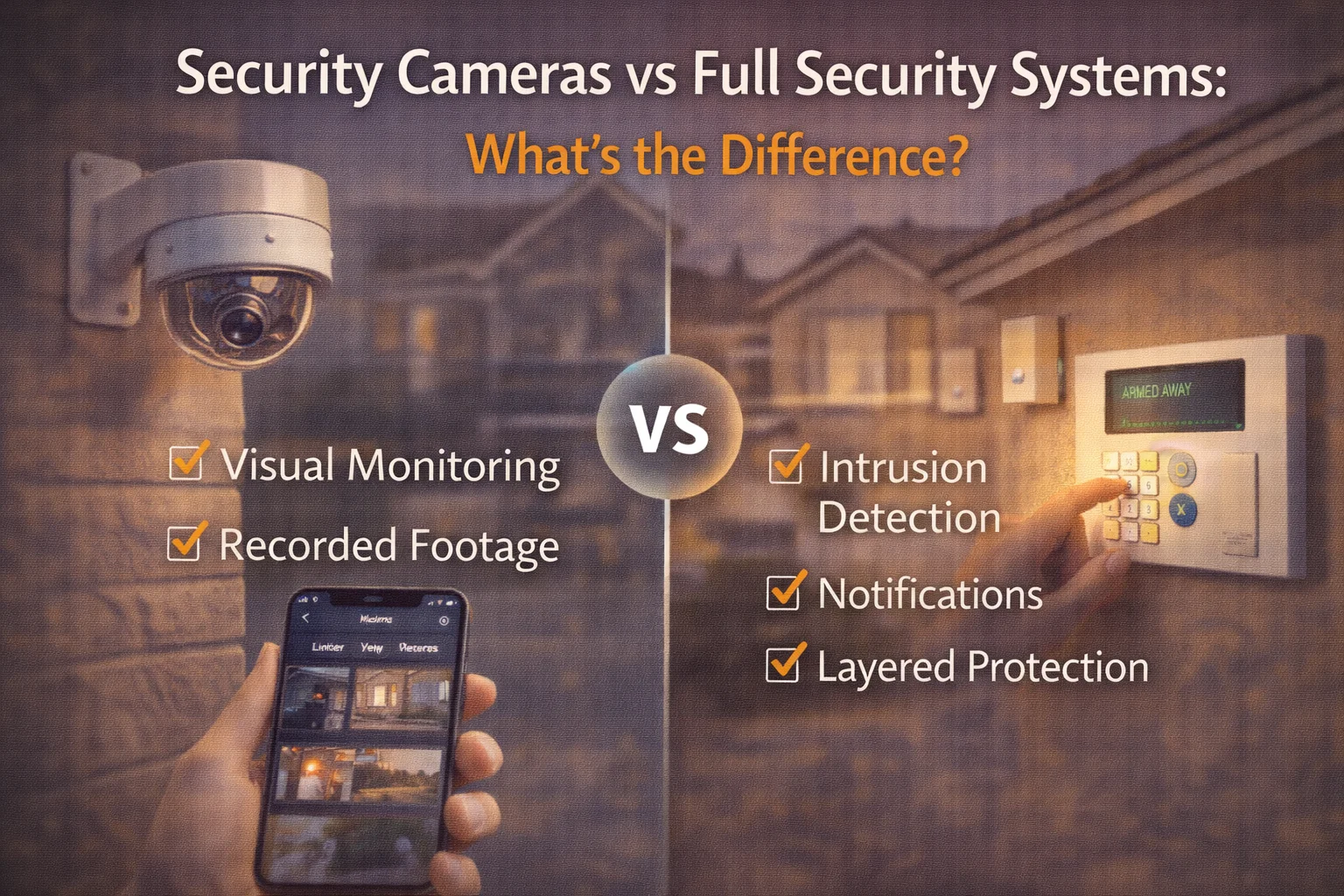
Security Cameras vs Full Security Systems: What’s the Difference?
When homeowners start researching home security, they often use the terms security cameras and security systems interchangeably. While the two are closely related, they serve different purposes—and choosing the wrong option can leave gaps in protection.
For Treasure Valley homeowners, understanding the difference between cameras and full security systems is key to building a setup that actually fits how the home is used, occupied, and protected.
This guide explains what each option does, where each makes sense, and how to decide what’s right for your home.
What Security Cameras Do Well
Security cameras provide visual awareness. They allow homeowners to see what’s happening around their property in real time or through recorded footage.
Cameras are commonly used to:
Monitor entry points
Watch driveways and yards
Check activity when away
Review events after they occur
For some homes, especially smaller properties or low-traffic areas, cameras alone can provide sufficient peace of mind.
Many homeowners begin exploring camera options while researching broader home technology solutions available through
👉 https://treasurevalleysolutions.com/services/
Where Security Cameras Fall Short
While cameras are valuable, they are reactive by nature.
Cameras:
Show what happened
Do not prevent entry
Do not alert homeowners when doors or windows open
May not capture events outside their field of view
If someone enters through an unmonitored door or window, a camera-only setup may never record the event at all.
This is where full security systems provide additional protection.
What a Full Security System Adds
A full security system combines cameras with active monitoring and detection.
In addition to cameras, full systems may include:
Door and window sensors
Motion detectors
Glass break sensors
Alerts and notifications
Optional professional monitoring
These components work together to detect activity even when it isn’t visible on camera.
Instead of only seeing events after the fact, homeowners receive immediate awareness when something changes.
Layered Protection vs Single-Point Visibility
The biggest difference between cameras and full systems is layering.
Camera-only setups provide visibility at specific locations. Full systems layer multiple forms of detection to cover:
Entry points
Interior movement
Unexpected access
This layered approach reduces blind spots and improves overall reliability—especially in larger Treasure Valley homes with multiple access points.
Which Option Makes Sense for Treasure Valley Homes?
There is no one-size-fits-all answer.
Security cameras may be enough if:
The home is small or low-risk
Visibility is the primary concern
Entry points are limited
Full security systems are often better when:
Homes have multiple doors or windows
Families want alerts, not just footage
Homes are vacant during the day
Owners want layered protection
Many homeowners discover the right balance while planning broader solutions outlined within
👉 https://treasurevalleysolutions.com/solutions/homeowner-solutions/
Cameras and Security Systems Work Best Together
It’s important to note that this isn’t always an either/or decision.
Many modern setups combine:
Cameras for visibility
Sensors for detection
Automation for response
For example, a system may trigger alerts when a door opens and simultaneously record footage from nearby cameras.
This coordination creates a system that’s both informative and proactive.
Why Professional Design Matters
Whether choosing cameras alone or a full security system, design matters.
Professional planning ensures:
Cameras cover meaningful areas
Sensors are placed where they matter
Systems are easy to use
Future expansion is possible
Poorly planned systems often result in missed coverage, false alerts, or equipment that goes unused.
Frequently Asked Questions
Are security cameras considered a security system?
Not by themselves. Cameras are one component of a broader security system.
Do full security systems require monitoring?
Not always. Some systems operate without professional monitoring while still providing alerts.
Can I start with cameras and add sensors later?
Yes. Many systems are designed to expand over time.
Do cameras deter crime?
They can, especially when visible, but detection and alerts add another layer of protection.
Is a full system more expensive?
Upfront cost is higher, but full systems provide broader coverage and long-term value.
Choosing the Right Level of Protection
Security cameras and full security systems serve different roles. Cameras help you see what’s happening. Full systems help you know when something is happening—even when it’s out of sight.
For Treasure Valley homeowners, understanding this distinction leads to better decisions, fewer surprises, and security solutions that truly support daily life.
When security is planned thoughtfully, it provides confidence without complexity—and that’s exactly how it should feel.