 (208) 991-3502
 Meridian, ID






 January 9, 2026
Security systems have changed dramatically in recent years. Learn how modern cameras and security systems protect Treasure Valley homes, what options exist today, and how to plan a reliable setup.
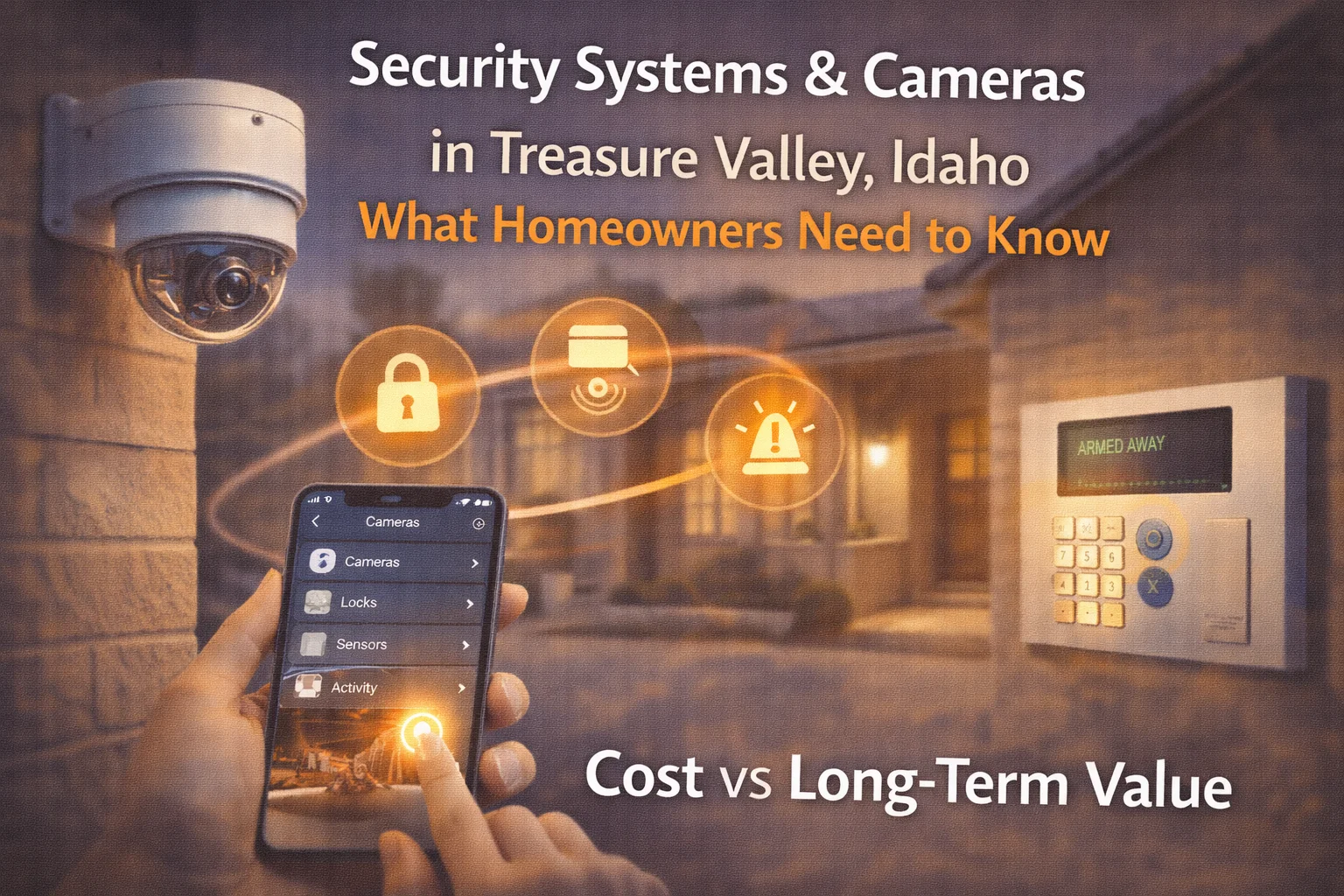
Home security means more than locks on doors and motion lights in the yard. Today’s security systems combine cameras, sensors, smart alerts, and automation to help homeowners stay informed, protected, and in control—whether they’re home or away.
Across the Treasure Valley in Idaho, homeowners are investing in security systems not out of fear, but for peace of mind, awareness, and everyday convenience. Understanding how modern security systems work—and how they differ from older or DIY setups—helps homeowners make informed decisions that actually improve safety.
This guide explains what today’s security systems include, how cameras fit into the picture, and why professional design matters.
What Modern Home Security Systems Include
Security systems have evolved far beyond simple alarms.
Modern systems may include:
Exterior and interior security cameras
Door and window sensors
Motion detection
Smart alerts and notifications
Mobile access and remote monitoring
Rather than relying on a single device, modern security systems work as a coordinated network—providing visibility and awareness across the home.
Many homeowners first explore these options while researching broader technology solutions available through
👉 https://treasurevalleysolutions.com/services/
Security Cameras vs Full Security Systems
Security cameras are often the most visible part of a system, but cameras alone are not always enough.
Cameras provide:
Visual monitoring
Recorded footage
Awareness of activity
Full security systems add:
Intrusion detection
Alerts when doors or windows open
Layered protection beyond camera views
For some homes, cameras alone may be sufficient. For others, especially larger homes or families, a complete system provides more comprehensive coverage.
Understanding this distinction helps homeowners avoid gaps in protection.
Why Camera Placement Matters More Than Quantity
One common misconception is that more cameras automatically mean better security.
In reality, placement matters far more than camera count.
Properly placed cameras focus on:
Entry points
Driveways
Side yards
High-traffic areas
Poor placement can create blind spots or capture unusable footage, reducing the system’s effectiveness.
Professional planning ensures cameras serve a purpose rather than simply adding equipment.
Wired vs Wireless Systems in Idaho Homes
Treasure Valley homes experience seasonal weather changes, varying construction styles, and different connectivity conditions.
Wired systems:
Offer consistent reliability
Avoid battery maintenance
Perform well in larger installations
Wireless systems:
Install faster
Work well for smaller or retrofit projects
Depend more heavily on network quality
The right choice depends on the home, the layout, and long-term expectations—not just convenience.
Security Systems That Work With Smart Homes
Security systems deliver even more value when they integrate with other home technologies.
Integrated systems can:
Trigger lighting when motion is detected
Lock doors automatically when the system is armed
Send alerts based on specific events
Create routines for “away” or “night” modes
This coordination allows security to work quietly in the background, adapting to daily life rather than disrupting it.
Many homeowners plan these integrations as part of broader strategies outlined within
👉 https://treasurevalleysolutions.com/solutions/homeowner-solutions/
Privacy, Reliability, and Long-Term Performance
Security systems must balance protection with privacy.
Professionally designed systems:
Respect private spaces
Avoid unnecessary interior coverage
Use secure communication methods
Reliability also matters. Systems that frequently disconnect, miss alerts, or require constant troubleshooting often go unused.
Long-term performance depends on proper design, installation, and support—not just the equipment itself.
Why Professional Installation Matters
DIY security products are widely available, but professional installation provides advantages that are easy to overlook.
Professional installation ensures:
Correct camera placement
Reliable power and connectivity
Clean installation without exposed wiring
Systems designed for long-term use
For homeowners investing in security, proper setup makes the difference between peace of mind and ongoing frustration.
Frequently Asked Questions
Do I need a full security system or just cameras?
It depends on your home and goals. Cameras provide visibility, while full systems add layered protection.
Are security systems hard to use?
Modern systems are designed to be intuitive and easy to manage.
Can systems be expanded later?
Yes. Well-designed systems allow for future growth.
Do security cameras work during power outages?
Options vary by system design and backup power availability.
Is professional installation really necessary?
It’s strongly recommended for reliability, coverage, and long-term performance.
Security That Fits How You Live
Modern security systems aren’t about constant alerts or complicated controls. They’re about awareness, reliability, and confidence—knowing your home is protected without needing to think about it every day.
For Treasure Valley homeowners, thoughtfully designed security systems provide peace of mind that adapts to daily life and grows with future needs.
When security works the way it should, it becomes part of the home—not a source of stress.